Shiloh
SEEK Journal
August 6-8, 2025
My mom and I loaded the car with my luggage for SEEK. Because of the driving distance, my mom planned a mini vacation with my little sister in Orlando. So more luggage got loaded. And snacks. And toys for my little sister. Finally it was time to go. I thought I would do my summer reading assignment on the way up to Brooksville, but my sister fell asleep, and I spent hours talking with my mom. We talked about some of the things I’d done at Wekiva and how this trip might be different.
Since Mom was driving, I was designated the one to Google everything. Neither of us had heard of Withlacoochee before so that was what I looked up first. I knew it would be a Native American name and learned that it meant crooked river. I also learned that Withlacoochee was an alluvial river and that makes it important to the aquifer and ecosystem and water management. After that I started finding scientific papers, but Mom said I didn’t have to read them aloud to her!
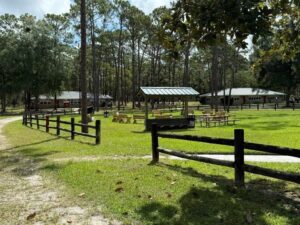
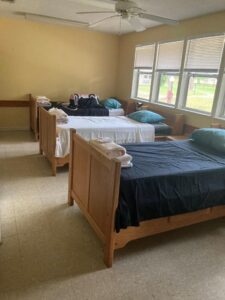
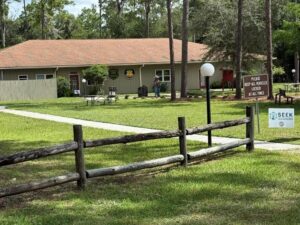
We got turned around and had to make a few U-turns, so we arrived a little late. When we finally pulled in, I was really happy. The Forestry Training Center looked really nice. The grounds were pretty with pinecones scattered everywhere and modern-looking cabins. We went inside and I was relieved to find I was not the last one to arrive! Jennifer (Seymore) welcomed me and gave me a nametag. Then a couple of the other girls took me to put my stuff in my cabin. It was air conditioned! I loved my summer experiences at Wekiva, but air conditioning is an awesome amenity. After I dropped off my things, we returned to the main classroom building and my mom and sister left. The last few people arrived, and we all assembled to get started.
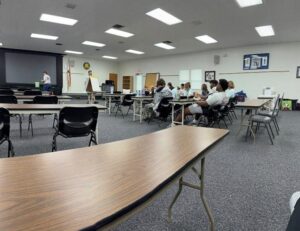
Back in the classroom, we were introduced to two forest rangers. They discussed the ecoconscious policies that we were expected to follow. These were simple things like shutting the A/C and lights in rooms not in use and not running water excessively (short showers), etc. They also told us that the Withlacoochee Training Center was not reserved for our sole use. During our stay, we would see firefighters there for training as well. The rangers then led us outside to see the memorial site for fallen forestry firefighters. They said this site was to honor the sacrifice of thirteen who had fallen in service. In Florida, there are actually three memorial sites. This one at Withlacoochee, one in Ocala, and one in Tampa.
As a child, I’d heard of Smokey the Bear: “only you can prevent forest fires.” At Wekiva, we learned about Smokey the Bear and how the figure helped bring awareness to the need for caution in nature. At SEEK, we learned that originally, he was symbolic of fire prevention in general and later became representative of preventing forest fires. However, some fires are beneficial (like controlled burns). So as time went by, he became the representation of wildfire prevention. When I got home, I looked up Smokey the Bear and learned that a bear cub was rescued from a New Mexico wildfire in 1950. He was sent to the National Zoo in Washington, DC where he became the mascot for fire safety as Smokey the Bear!
After the rangers left, it was time for dinner, so we all went to the dining hall. We had spaghetti and meatballs and garlic rolls. They also had a salad bar and drinks and ice cream. I had a salad with ranch dressing, cranberry juice, and chocolate ice cream with chocolate syrup on top! After dinner we went back to the cabins to get to know our roommates. We spent time together and talked until it was time to shower and go to sleep.
The next day was Thursday, and we planned to visit different springs and swim with manatees. We had to get up very early – like 5:45am. I got dressed in my swimsuit and shorts and packed a change of clothes and sunscreen and towel. Then my roommates and I went to the dining hall for a quick breakfast sandwich and juice before getting into the van that would take us to the manatees. The drive was about an hour and fifteen minutes and most of us slept the whole way there. When I woke up, we were at Crystal River.
They showed us a video on how to safely interact with the manatees. They said to move as little as possible, so we did not scare them. We were not supposed to reach out and touch the manatees, but it was fine for them to touch us. We should try not to swim over them, but if one rose up from beneath us, to just stay still and let it carry us up. Then when it went back down, we could gently swim away from them. No one got lifted by a manatee, but it was great to learn what they would do. I was shocked to learn that manatees have only 35% body fat. I had always been taught that they were sea cows. Here they told us they were more like beef cakes! Although they are slow moving and gentle, most of their bodies are solid muscles. The manatees migrated to Florida for the spring water temperatures. The water is very cold for humans, but warm for manatees. We also learned that algae collects on females because they are still for long periods. Male manatees tend to be more active and move more so they collect less algae.
After the video instruction, we went to put on wet suits. They provided one-piece wet suits with long sleeves and legs, and a zipper in the back. Getting into them was super challenging. Once I got the suit on, I could not reach the zipper cord so someone else zipped me. It was a little embarrassing because they zipped their own suit with no problem! Then we all boarded a boat with metal benches for seats. Then we rode around for about an hour. The boat captain drove while a Crystal Springs spotter looked for manatees. While we were looking for manatees, a dolphin sprang up out of the water. This was a big surprise because we didn’t know there would be dolphins here. I only saw one bottlenose dolphin, and it happened so fast that I did not get to take pictures, but I will always remember it.
Then the spotter called out to the captain that he saw manatees, so they anchored the boat and passed out snorkels and masks to each of us. We tested the fit to make sure they were okay. I didn’t have any problems with mine. We climbed down a ladder into the water which was 72°F. Even though I was wearing a wetsuit it still felt freezing cold to me but as I swam toward the manatees got used to it. We reached the manatees and kind of made an arc around them to watch. When the manatees started moving, we followed. I moved to the front of the group to be closer and when one of the manatees turned, its back fin brushed against my arm. It was awesome! I think only one other person on the trip made physical contact with a manatee. We stayed in the water for about 45 minutes. There were two manatees and our group divided so that half followed one, and half followed the other. I think the one I was following was a male. Males are smaller than females and this one looked big, but they said it was a larger-than-normal male. Manatees swim using their tails and front flippers and can move at about 3-5 miles per hour. Ours moved much slower and we just followed as he drifted along. We were told to be as quiet as possible and not splash so we wouldn’t startle or spook the manatees. We kind of used a slow breaststroke with our arms to move through the water and didn’t kick our feet at all.
The boat didn’t follow us so when it was time to leave, we had to swim all the way back. Then we climbed up a short ladder and back onto the boat. Once out of the water, I was freezing cold again. I had become acclimated to the water, and the slight breeze made me cold even though the temperature on the boat was much higher than in the water. We returned to the dock and returned the wetsuits but kept on our swimsuits. Getting out of the wetsuit was a lot easier than getting in! Before leaving, we got to go shopping in a gift shop and I bought souvenirs for my family and myself. I have a little sister and baby family members, so I found them cute socks and toys too – this got me some really odd looks from the other kids.
We got back on the van and drove for about 30 minutes to another park to study wildlife in the area. Jennifer told us about invasive and native species and their importance to the environment. Then we did an activity where we would go around the park identifying plants. Whoever found the most species and could identify both its common name and genus species would get a prize at the end of the SEEK program. I took pictures on my phone and used Google to identify the species. I found seven which wasn’t the most but was still a fun experience. These are the species that I found:
After the springs, we drove about 15 minutes to a waterpark, and it took us a while to get in because we went to the wrong entrance but the whole thing was really funny. When we got in, we had this small cabana that was really nice. We learned that all the water for the water park was sourced from the springs and there were no chemicals or chlorine. They had some kind of filtration system that made use of the natural water and kept it clean. The water here was just like the springs with the manatees because the water was still 72°F. So it was freezing at first and it took me a while to get in! There were slides and a lazy river and it was all really nice. Lots of trees. There was an area where you could walk down a ramp and there was sand, so kind of like a beach but with fresh spring water. Because it was so cold, I inched my way in with first my feet and then ankles and knees … until I was actually in the water. We stayed there for about three hours and then returned to the training center.
We changed our clothes and then went to dinner. That night they had a Cuban theme with pork and rice and beans, and salad and rolls. And cranberry juice. That’s my favorite juice and I was surprised and happy they always had it. After dinner we had time to shower and then we met to do an activity with newspapers and National Geographic magazines. We were in teams of two and needed to find articles having to do with water in either the newspaper or the magazine. I chose the National Geographic magazine, and my teammate chose the newspaper. We showed our partner what we found and then used our phones to Google the reliability of the sources and author and whether it was still relevant today. We found the newspaper articles were more relevant to local areas but the authors (if there was a byline) did not really have published credentials. National Geographic on the other hand had credible authors who submitted articles that were then reviewed by a panel before the magazine chose which to publish. So their stories were both peer-reviewed and vetted.
Then we all went outside to a firepit to make s’mores. Louis (the other counselor) showed us how to build a fire. We gathered wood and twigs and stuff and then had a real fire to roast marshmallows with chocolate and graham crackers. I had two but they said we could have as many as we wanted. I got tired and returned to my cabin before everyone was done so I didn’t see how they put out the fire, but I know that they made sure it was completely extinguished with no hot spots or embers remaining.
We got up and went to breakfast where I had scrambled eggs, bacon, and sausage. And my cranberry juice! Then we returned to the classroom and Jennifer discussed how the Garden Clubs were looking for ways to recruit younger members. For us, we talked about an online group with Zoom meetings and Jennifer guiding us. I’m not sure if this will take off but it could be interesting to do across the year.
Then we got to meet with firefighters who were at the training center. Some were there for training, but others were there as instructors. They gave us a tour of their equipment that they use to “face the forest” and discussed some of what they did for controlled burns.
They showed us a drone that can reach altitudes of over 100’ in the air and had cameras that could see 450’ in different directions. The drones were equipped with pellets that had chemicals that could be dropped into areas to create very small, controlled fires that would slowly spread. They used sand and water to create a perimeter and contain the fire within the controlled area. When they need to fight fires, they also have giant bulldozers to move huge amounts of sand. This is used to stop an advancing fire and can also be used to plan the stopping point for a controlled burn.
After meeting with them, it was time to wrap things up and get ready to leave. Jennifer gave out souvenirs to everyone and then my mom and sister arrived to pick me up. I said my goodbyes and pointed things out to my little sister as we walked back to the car. She was fascinated by the pinecones all over the ground, so we collected some to take home.
| Cookie | Duration | Description |
|---|---|---|
| cookielawinfo-checkbox-analytics | 11 months | This cookie is set by GDPR Cookie Consent plugin. The cookie is used to store the user consent for the cookies in the category "Analytics". |
| cookielawinfo-checkbox-functional | 11 months | The cookie is set by GDPR cookie consent to record the user consent for the cookies in the category "Functional". |
| cookielawinfo-checkbox-necessary | 11 months | This cookie is set by GDPR Cookie Consent plugin. The cookies is used to store the user consent for the cookies in the category "Necessary". |
| cookielawinfo-checkbox-others | 11 months | This cookie is set by GDPR Cookie Consent plugin. The cookie is used to store the user consent for the cookies in the category "Other. |
| cookielawinfo-checkbox-performance | 11 months | This cookie is set by GDPR Cookie Consent plugin. The cookie is used to store the user consent for the cookies in the category "Performance". |
| viewed_cookie_policy | 11 months | The cookie is set by the GDPR Cookie Consent plugin and is used to store whether or not user has consented to the use of cookies. It does not store any personal data. |
